Cooking Basics for Beginners & Beyond
To this day, I still find myself picking up new tips, tricks, and techniques every time I step into the kitchen. Whether it's from a friend, a cookbook, or simply observing how someone else cooks, there's always something new to learn. Every culture, family, and individual brings their own traditions and flair to the table — and that’s part of what makes cooking so endlessly beautiful and inspiring to me.
Still, amid all those differences, there are a handful of foundational techniques that transcend cultural lines. From how we handle a knife to the way we prepare meat or layer flavor, these basics form the backbone of good cooking everywhere. Once you understand these core methods, you can start to cook with more confidence, creativity, and ease — no matter what kind of dish you’re making.
Why the Foundational Skills Matter
First and foremost, this topic is close to my heart because helping others feel capable and confident in the kitchen is at the core of Little Ladle Living. My mission has always been to break down the basics in a way that feels approachable, useful, and encouraging — not overwhelming.
Understanding the foundations of cooking isn’t about perfection or fancy recipes — it’s about giving you the tools to feel more confident, knowledgeable, and adaptable, no matter what ingredients you have on hand or how much experience you bring to the table. My hope is that this guide helps you build skills you can rely on, experiment with, and grow from for years to come.
Cutting Through Confusion: Knife Basics Made Simple
You don’t need anything fancy, you just need to keep it sharp! You don’t need to get a super expensive knife set, but you do need to make sure that you have a knife sharpener. Cutting with a dull knife is dangerous because it requires more force, increasing the likelihood that the blade will slip and cause injury. Dull knives don’t grip food well, making it harder to control the cut, which puts your hands at greater risk. In contrast, a sharp knife slices cleanly and predictably, making it safer and more efficient to use. So before you begin thinking you need a new and better knife set, or that you are cursed from cutting an onion because you have cut yourself before, sharpen your knife!
There are two easy tools you can purchase. A Pull Through Knife Sharpener is a tool that you sit on the counter and run the blade of the knife through. To use it, you will pull the knife through the sharpener, using a back-and-forth motion. Make sure to apply even pressure as you go and pay attention to the blade's edge. You should aim to sharpen the entire length of the blade, including the tip. Most of these will have numbers by slots which represent the order in which you should run the blade through them. At the end of sharpening your knife, always remember to scrub and wipe the blade to remove any metal shavings left behind. If you have the budget to spend a little extra on a sharpener, I strongly suggest looking into an Electric Knife Sharpener. This tool operates in a similar way as the manual pull through style, but you have the help of an electric blade that can make the process faster and more use friendly.
The next step is learning the basics of how to hold a knife. Holding a knife properly is similar to a firm handshake or holding a tennis racket. Like a confident handshake, your grip should be firm enough to control the knife but not so tight that it causes hand fatigue or stiffness. Your fingers wrap around the handle while your thumb and index finger help guide and stabilize the movement—just as you would do when swinging a racket or driving a nail.
The “pinch method” of holding a knife is when you use your thumb and index finger on the bolster or neck/blade of the knife. Here is a simple example from Chef Panko representing where you can place your fingers for this grip.
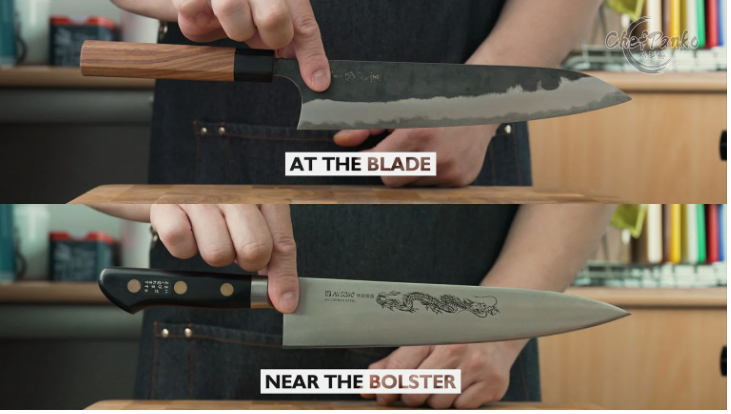
Picture Credit: How to hold your Chef's Knife - Knife Gripping Styles ChefPanko
Once you have your finger in the right pinching position you can great the handle with your remaining fingers. The best part of holding a knife this way is that you will have better control of the knife by having part of your hand on the handle and grip on the blade as well, which enhances the balance of the knife in your hands and also will help with any strain on your hands while cutting.
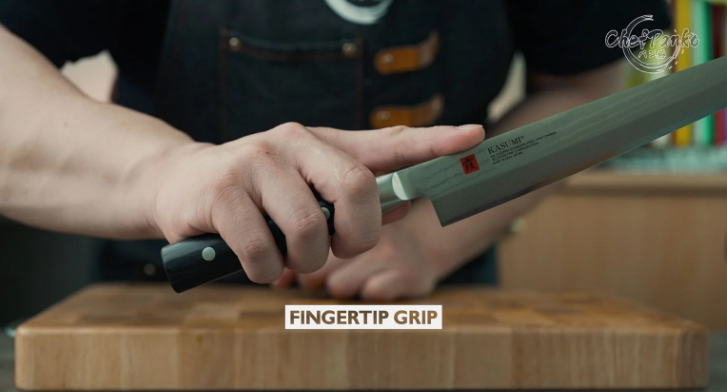
On the contrary, many home cooks use the handle and fingertip method, which can be very uncomfortable and will give you significantly less control over your knife. I recommend getting a few veggies you can chop and use for tonight’s dinner or store away for another time, and experiment with these different grips. What you will likely notice, is after cutting with the handle or fingertip grip, your wrists and fingers will feel strained and potentially even hurt. Then, try the pinch method. While the pinch method will get some taking used to, you will feel like you have more control and less pain while cutting.
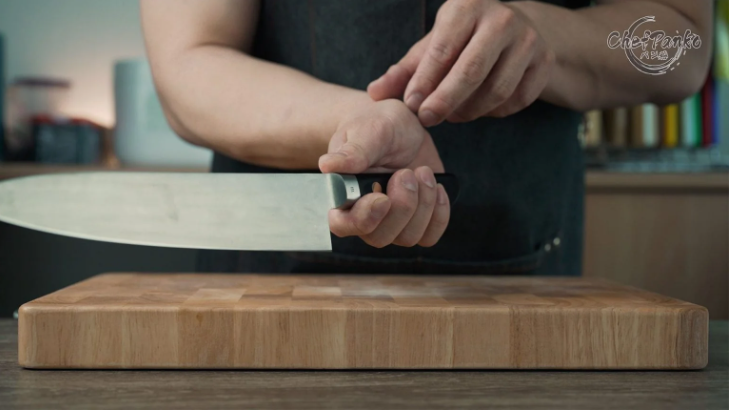
Now, what about your other hand? The most important thing to remember is that your fingers should never be flat and exposed to the blade. To keep them safe, use what’s called the “claw grip”. This means curling your fingertips inward and placing your knuckles closest to the blade while gripping the food.
Your curled knuckles act as a guide for the knife, while keeping your fingertips tucked safely out of the way. Most cutting injuries happen when the knife isn’t properly controlled—usually due to a poor grip—and when the guiding hand has flat, exposed fingers. By using the crab hand, you reduce the risk of injury and gain more control and precision in your cuts.
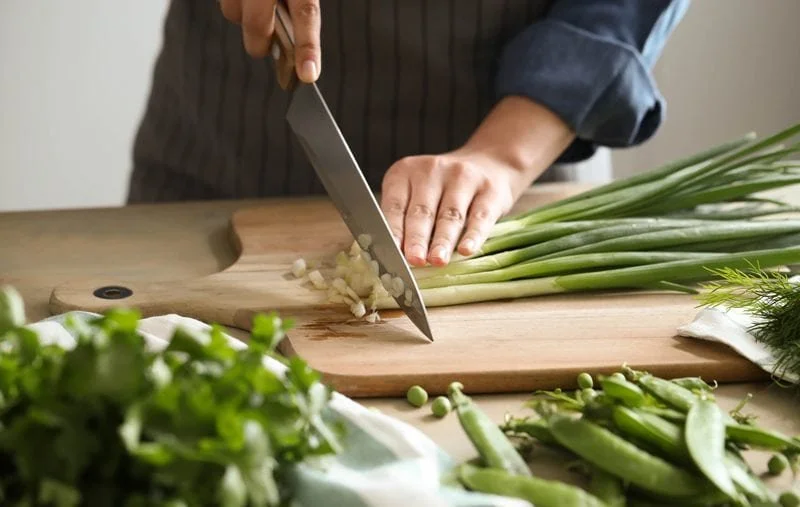
Flat hand and exposed fingertips, do NOT do this!