Pantry & Fridge: How to Get it Together!
Building a Budget-Friendly Pantry: Tips for Smart Shopping
Having a well-stocked pantry sets you up for success with recipes on this site and beyond. To make the most of your grocery budget, here are some practical shopping tips:
1. Shop Bulk to Save Big - Look for stores that offer a bulk section—places like WinCo are great for this. Buying from bulk bins gives you more control over quantity and cost. For example, if you’re not a frequent baker, you likely don’t need a full 2 lb. bag of flour. In the bulk aisle, you can buy only what you need and often pay less per pound.
2. Be Mindful of Storage - The downside to bulk shopping is that items often come in plastic bags, which aren’t ideal for storage. Consider investing in airtight containers for easier organization and longer shelf life. This affordable set from Amazon is a good place to start (or check your local discount store for deals).
3. Check Out Discount Grocery Stores - Local discount grocery stores can be goldmines for pantry staples at lower prices. While they may have limited options for meat and dairy, they’re usually well-stocked on dry goods, canned items, and more.
4. Use Store Apps & Loyalty Programs - Some will love this tip—others, maybe not—but it’s worth considering: download the apps for the stores where you shop. Joining their loyalty programs can unlock exclusive discounts, gas rewards, and access to digital coupons. Browsing the weekly ad takes just 10 minutes and can help guide your meal planning and save you money.
You don’t have to become a “crazy coupon person,” but small steps like these can lead to significant savings over time—especially when you’re working with a limited budget.
Let’s Talk About Your Fridge (and How to Keep It From Becoming a Graveyard of Produce)
We’ve all been there. You open the fridge, excited to cook something fresh… and you’re met with that sad, slimy bell pepper you meant to use. Or that half-eaten bunch of cilantro that’s now mostly brown.
Trust me—I’ve been there, more times than I care to admit. In fact, when I first started my journey toward identifying as a home cook, this was hands-down my biggest challenge: overbuying fresh ingredients with good intentions, then tossing them out days later.
Think about the last time you threw out a fruit or vegetable. How did it make you feel? For me, it was a mess of emotions:
· Guilt, because I wasted food.
· Frustration, because I planned to use it and didn’t.
· Annoyance, because now I had nothing prepped.
· Sadness, because it always goes bad the day I finally plan to use it.
And then what happens? I revert to fast food or delivery. More money spent. More guilt. More waste.
This vicious cycle is exactly why I created this blog in the first place. I wanted someone to tell me what to cook, what to buy, and most importantly—when to buy and cook it. I didn’t want more food going to waste. I wanted meals that worked for real life.
Let’s Break It Down: How Long Produce Really Lasts
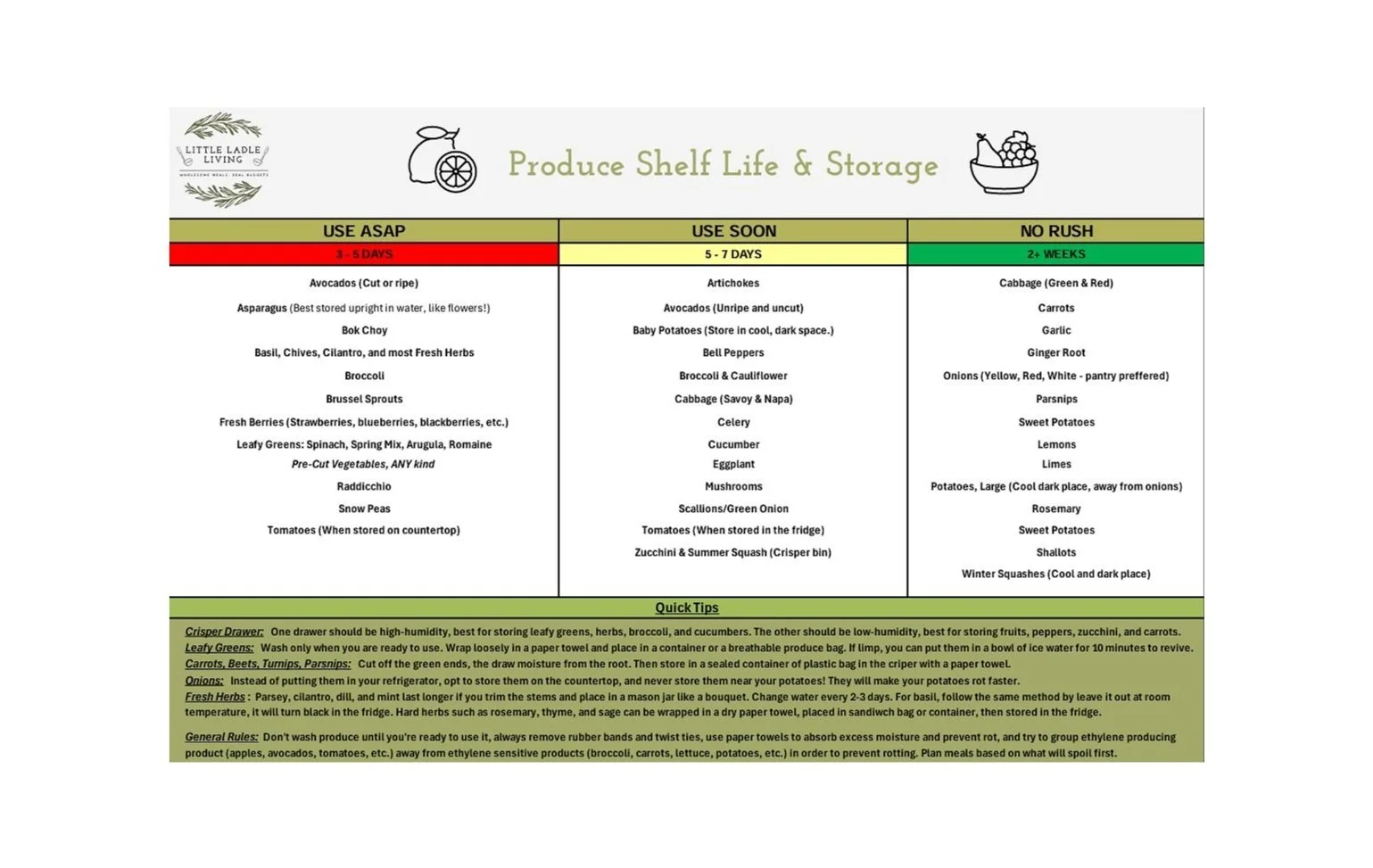
One of the easiest ways to cut down on food waste is simply knowing how long your fruits and veggies stay fresh. Some items only last a few days, others a week or more—and when you know which is which, it’s way easier to plan meals without the guilt of tossing slimy spinach or mushy berries.
Here’s a simple system I use: I group produce into three categories:
· Use ASAP (3–5 days)
· Use Soon (5–7 days)
· No Rush (up to 2 weeks or more)
Download the chart below and keep it handy:
· Save it to your phone for grocery runs
· Print it out and stick it to your fridge
· Or, use one of my custom calendars that already has this system built in—so you don’t even have to think about it. I’ll take care of the “what to use when” part for you.